Wednesday, December 20, 2006

winter solstice

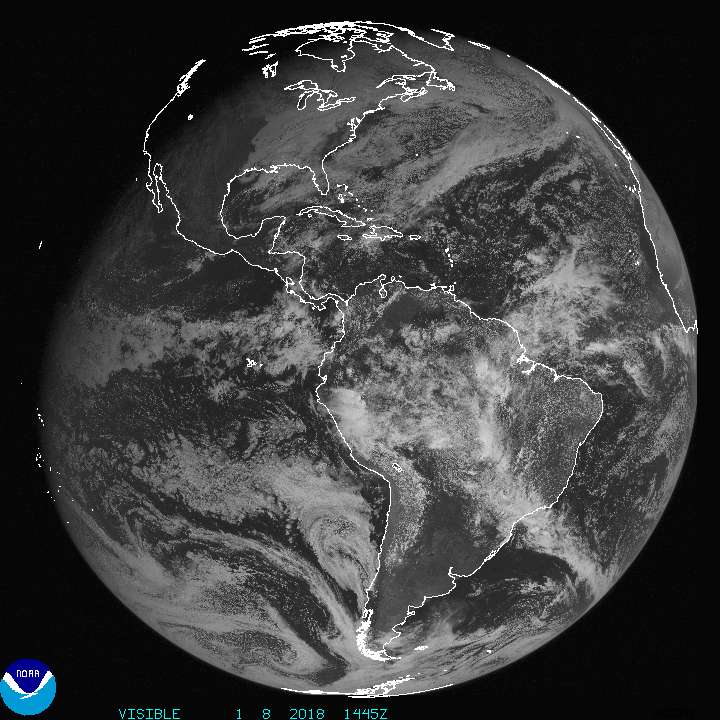
Today at 7:22 PM winter solstice 2006 arrives, the shortest day of the year and the beginning of winter in the Northern Hemisphere. I'm currently in Buffalo, NY, the media ordained cold capital of the universe, and there is no snow and relatively mild temperatures. Nevertheless, winter has arrived.

astroarchaeology....sort of

Thirty years ago this past summer the Viking 1 and 2 landers set down on Mars and provided some of our first images from the surface of the red planet. The landers didn't rove and they didn't abrade rocks for spectroscopic studies. They just sat there, took a few images, dug a small hole in the nearby soil, and then died. For thirty years they have sat exactly where they landed, and until recently we had no way of checking on them. The Mars Reconnaissance Orbiter (MRO) entered orbit around Mars earlier this year carrying an imaging system that can resolve surface features as small as a few feet across. The images above show the regions where Viking 1 and 2 landed. While you can't see fine detail of the landers, you can see that they are still resting on the surface after 30 years. I consider these images the beginnings of astroarchaeology, which actually began over 30 years ago when Apollo 12 landed on the moon near a lunar lander. Despite our human need to explore new places, we have a powerful need to explore our past in the form of relics and ruins. Even with all of Mars at our disposal with an advanced imaging system, our first targets were relics of the first robotic exploration of Mars.

Y2K7 fears

From CNN:

NASA wants Discovery back from its 12-day mission by New Year's Eve because shuttle computers are not designed to make the change from the 365th day of the old year to the first day of the new year while in flight. Engineers have developed a fix but are reluctant to try it because it hasn't been thoroughly tested.


I can absolutely appreciate the difficulties of managing time with computer software (we've been having lots of problems lately at work handling time changes with software) but this seems like something that should have shot to the top of the to-do list as soon as this shuttle flight was scheduled. A shorter shuttle flight is better than no flight though.

Tuesday, October 31, 2006

Hubble saved, again

NASA Administrator Michael Griffin announced today that the Hubble Space Telescope would receive one last shuttle servicing in 2008 to extend it's life another 2 or 3 years. Hubble is currently suffering from some system failures and will not last much longer without some help. Because the shuttle program is also not long for this world, there was considerable debate about the wisdom of "wasting" a shuttle mission on a servicing trip to Hubble. Most of the remaining shuttle missions are needed for the completion of the international space station. However, scientific interests appear to have won out on the Hubble decision. If Hubble is not serviced soon and fails in the next year or two, there will offically be a gap in our optical observations of the universe from Earth orbit because the next generation space telescope does not launch until at least 2011. A Hubble servicing will keep it alive into 2011 until the James Webb Space Telescope is launched. This appears to be the course of action that NASA announced today. So, in May 2008 Shuttle Discovery will pay Hubble a visit, 18 years after the launch of the great observatory.

Monday, October 30, 2006

Your name here

I'm not really sure what I think about this new "send your name into space" movement with the space program, but I think I'm ok with it. Anything that attracts public attention to space missions is a good thing. So, I thought I'd put this out there for anyone who is interested. Dawn is a spacecraft mission to the asteroid belt that launches next summer. It arrives in the asteroid belt in 2011 and will study the two largest asteroids there, Vesta and Ceres. A microchip will be onboard that contains the names of people who submit to this website by November 4. It looks like you can submit as many as you want, and the current tally is about 170,000 names. So, submit yourself, submit your family, submit your cat, it's not every day you get to send your name to an asteroid.

Crescent Moon and Venus

We have all seen the Moon during the day, but not many people know that the planet Venus is also visible during the day. It's generally not visible to the naked eye, but if you know where to look you can easily spot it with binoculars or a small telescope. The image above, taken by Ivan Eder in Budapest, Hungary, shows not only a daytime crescent Moon but a crescent Venus just to the left of the Moon. The image captures an incredible distance range of millions of kilometers and reminds the viewer of the importance of perspective. Venus is much larger than the Moon but because it is so distant it appears almost insignificant in this image. How is it that Venus is visible during the day? Venus is actually one of the brightest objects in our sky. Completely shrouded in cloud cover, it reflects an enormous amount of sunlight into space. Being relatively close to the Earth it becomes a very bright object in our sky, bright enough to overcome a brilliant blue sky.

Monday, October 16, 2006

Mauna Kea

The picture shows the domes of the observatory on the extinct volcano Mauna Kea on the big island of Hawai'i. It was taken from the Kohala Coast on the western shore of Hawai'i at a distance of about 30 miles from the peak. This was the best view we had of the domes all week, the peak was clouded in the rest of the week. The telescopes on Mauna Kea are diverse and international. Over a dozen countries are represented at the observatory with about a dozen different telescopes. The United States, Canada, Britain, Japan, the Netherlands, Taiwan, and France all have a stake in the telescopes on the mountain. Mauna Kea is very well suited for optical astronomy but is extra special because the water vapor content of the atmosphere at 14000 feet elevation is quite low. Low water vapor content is essential for infrared astronomical observations from beneath the Earth's atmosphere. Water vapor in the atmosphere absorbs infrared radiation from space, making earthbound infrared observations very difficult. Furthermore, Mauna Kea is one of the few locations on Earth at 14000 feet where the landscape is amenable to construction. So, low water vapor content and a relatively friendly landscape make Mauna Kea an astronomical gem here on Earth.

Unfortunately, several of the telescopes and their housings were damaged in the large earthquake that struck the Hawaiian islands on October 15. Damage is still being assessed, but initial indications are that at least one dome was pushed off bearings and a few telescopes were knocked out of alignment. Provided lenses and mirrors survived unscathed, the damage is not too bad. Regardless, some of the telescopes will probably be out of commission for months.

back in a (green) flash


Sorry for the delayed return, a week in Hawaii can hamper one's interest in doing much of anything other than sitting on the beach and enjoying frosty drinks. Hawaii itself actually provided a few interesting points of astronomical interest, and I'll get back in the swing of things with those. I saw my first green flash last August on my first trip to Hawaii. There are enormous details involved that I don't entirely understand, but the green flash is basically a refractive phenomenon in which the rising or setting sun shows a brief (1 or 2 seconds at most) flash of green light just before crossing the horizon. The light from the sun is bent through the atmosphere, different wavelengths being bent to different degrees, and for a brief instant green is separated out from the other colors. After seeing this spectacle last summer in Hawaii, I was determined to not only see it again on this trip, but also photograph it. I was successful on both counts. The photo here was taken on our second night on the big island, probably the best sunset of the entire week. It's not perfectly in focus, but the green is definitely there. A third viewing of the green flash followed on our second to last night. Considering that many people never manage to see a green flash, even with years of trying, I consider myself lucky to have now seen three.

Sunday, September 17, 2006

9-1 = 8

Now that the smoke appears to be clearing, I wanted to comment on this whole Pluto demotion circus of recent weeks. Pluto has always been considered an oddity. It has a highly eccentric orbit (non-circular) as well as a very inclined orbit (Pluto leaves the "equatorial" region of the solar system, unlike the rest of the planets). We do not yet know all the details of it's composition, but we know enough to state that Pluto has compositional characteristics that put it on par with comets and general icy bodies of the outer solar system. In recent years, astronomers have discovered a number of large icy bodies in the outer solar system. This region, the Kuiper Belt and the larger Oort Cloud, are potentially populated with a dozen or so Pluto sized objects. So, when the IAU sat down to consider the definition of a planet, in my mind they were faced with two options: add more planets to the solar system, or create a new category of bodies. I think they chose the right option, which is to add one category rather than add a new planet every 5 or 10 years when we find another large Kuiper Belt object. This leaves us with eight classical planets and an open-ended number of "dwarf" planets. Pluto, or I should say 134340, is a member of a class of bodies that number in the millions. There's only one Earth, or Mars, or Jupiter. In my mind, Pluto just isn't that odd anymore. I think of it as the Kuiper Belt's ambassador to the solar system, an object that tells us the outer solar system is a very interesting and important region that may have brought water and even the seeds of life to Earth. That's not too shabby, if you can't be a planet.

Saturday, September 16, 2006

the setup

This photo shows my typical setup with the new telescope. I was targeting Jupiter this particular night and I was attempting to image the planet with my small CCD camera. The gray wire running from the telescope to the USB port of the laptop is the CCD. All the other wires are the various power cords, including a 50 foot extension cord that I actually throw over the "roof" of my condo and onto my patio one flight beneath where this photo was taken. From this top flight of my complex I can see most of the southern sky.

As for imaging Jupiter, it didn't turn out all that well. I think there was a brushfire in the area and it was kicking up smoke that made the seeing terrible. I tried to slew to some deep sky objects but no success, the seeing just wouldn't cooperate. So, it was time to break down the set and despite the tangle of wires, everything was put away in about 5 minutes.

Tuesday, September 12, 2006

nearing Victoria Crater

The Mars Exploration Rover Opportunity, nearing 3 years on Mars and 5 miles on the odometer, is fast approaching a geological treasure trove. In the next week Opportunity will reach the rim of Victoria Crater, a half mile wide impact crater that is over 200 feet deep. Layered rock in the crater rim should present a clean cross section of millions of years of Martian history. Opportunity has already gathered evidence for the ancient presence of liquid water on Mars at Endurance Crater, a much smaller impact feature. Victoria Crater will hopefully provide more evidence for how extensively liquid water flowed on the surface and for how long. The image shows Opportunity's progress to date with the yellow trace.

Thursday, August 31, 2006

Orion has a home

Lockheed Martin Corporation was awarded the prime contract for the Orion manned space vehicle today. The move is interesting since most analysts predicted the Northrop Grumman/Boeing team would win the contract considering their experience with manned spaceflight and heritage from the Apollo program. Instead NASA has opted to give the work to the largest defense contractor in the nation that specializes in unmanned rocketry. The contract award is the beginning of an ambitious project that could last until at least 2019 and end up doling out nearly $10 billion. Here's hoping all goes well.

Moon images


These images were taken last night, a nearly first quarter Moon. I scrapped afocal imaging with my standard digital camera and opted for a nifty and affordable little CCD camera designed for astronomical imaging. I'm amazed at how much the cost of astronomical CCDs has dropped in the past 10 years. These images are stacked (several dozen individual images averaged together to produce a sharper composite image) and were taken at 1/8 second exposure. The top image shows one of the heavily cratered landscapes near Mare Nectaris. The three larger craters on the right of the image are the same craters I posted an old photographic image of a month or so ago. The bottom image is Mare Serenatatis and the Apollo 17 landing site is toward the top right of the image. Note the mountains toward the lower left and the long shadows cast toward the terminator.

Friday, August 11, 2006

getting better...

I still have a long way to go, but my pictures of Jupiter are improving. Using the afocal method (manually holding the digital camera up to the telescope eyepiece) is far from ideal, but as you can see, it can capture some of the larger details of a planet. This image was a 1/25 second exposure with some minor post-processing brightening. I managed to escape any vignetting on this image, which is an optical effect similar to looking through a straw that results from using afocal imaging. At this point I'm more looking forward to imaging the moon because of the orders of magnitude more detail that can be captured. Right now the moon is 2 days past full so it's very bright and lacking in contrast, but I'll probably take a shot at it later tonight.

Wednesday, August 09, 2006

Dr. Van Allen

A fond farewell to Dr. James Van Allen, who died today at the age of 91. Van Allen just about single-handedly gave birth to the field of magnetospheric physics, the field in which I pursued my graduate studies. He discovered the Earth's radiation belts, regions near the Earth where energetic ions and electrons are trapped in the Earth's magnetic field. The discovery was made with a simple Geiger counter placed on the first United States satellite in 1958, Explorer I. While the United States was trying to respond to the Soviet success of Sputnik, the discovery of the radiation belts ushered in an entirely new field of geophysics.

James Van Allen also distinguished himself for being a vocal critic of manned space exploration. He believed that space exploration was more cost effective and scientifically rewarding when done robotically. While there is some legitimacy to this stance, I think a recent example shows how valuable human presence is in space exploration. I attended a symposium for work last year and one of the key note speakers was a staff scientist on the Mars Exploration Rover program. He showed how the rovers Spirit and Opportunity have provided an enormous amount of robotically acquired data that will keep scientists busy for years to come. However, he made sure to point out that all the science performed robotically by the rovers in 1 year on Mars could have been done in about an hour by a human. That's a sobering number, and it illuminates the incredible power of the human eye, human mobility in uneven terrain, and of course the human brain. Certainly robotics is making leaps and bounds in the approximation of human capabilities, but in the end the only way we can truly know a new environment is by going there and letting it engage our senses, our logic, and our wonder. We are currently heading into a period of more aggressive human space exploration that will require unprecedented financial and time commitments. Time will tell if Van Allen's approach to space exploration wins out in the end.

Tuesday, August 01, 2006

ultimate time capsule

The Alliance to Rescue Civilization, an advocacy group with the long term survival of humanity as their top concern, recently proposed the construction of a modern day Ark on the moon to preserve DNA of all life on Earth as well as a compendium of human knowledge. A modern day Ark is not a new idea of course. Numerous companies and organizations are springing up around the world that are collecting DNA from a broad spectrum of organisms (especially endangered ones) in the interests of preservation for a more environmentally friendly future. Libraries and museums are actively converting anything and everything into digital formats for long term storage. The Alliance to Rescue Civilization argues that an Earthbound storage facility is too risky because of the potential for large asteroid impacts that could destroy not only civilization as we know it, but any sort of DNA storage facility. The ARC therefore proposes putting such a facility on the moon, where it would supposedly be safer. I think this is a perfectly fine idea, the moon is a stark and sterile body well away from the prying hand of man. However, I do see some problems with the ARC proposal. First and foremost, such an effort is prohibitively expensive at this point in human history, regardless of the supreme importance of such an effort. Secondly, the moon is just as likely to be devastated by an asteroid impact as the Earth.

I would argue for a simpler approach. Put the DNA samples and a few terabytes of human knowledge (texts, artwork, photographs, music, etc.) onboard a spacecraft and place it in orbit around the sun. This could pretty much be done with current technology, making it affordable. As long as the DNA samples were kept in a part of the spacecraft shaded from direct sunlight, the cold of space offers the best possible refrigeration. Of course, fully sequenced genomes could be digitally stored, it's really not necessary to include the amino acid raw materials in that case. How about likelihood of being destroyed? A tiny spacecraft in orbit around the sun has an effectively zero chance of ever encountering another object large enough to destroy it. We've already sent a very scaled down version of this approach on a journey out of the solar system altogether with the Voyager 1 and 2 spacecraft. They carry audio, photographic, and symbolic information about humans, but nothing more.

Regardless of the approach, I think the ARC proposal has merit. Perhaps it is time to start thinking about putting a few of our eggs in other baskets.

Sunday, July 30, 2006

alignment success

Fired up the new telescope tonight to see if I could get the initial setup and tracking working. One of the advantages of this telescope is that I can be on the patio, powered up, and aligned in 5 minutes, if everything works. I started by getting a quick manual look at the moon before it headed into the trees. Stunning. I then powered up and went through the alignment procedure. I suspected my problem from a few nights ago was that the scope was not aligned to geographic north accurately enough. I got a better idea of north using a map and tested the idea tonight. After alignment I programmed the computer to slew the telescope to Jupiter. After about 20 seconds of slewing, I looked through the finder scope (the wide field of view scope used to get a large scale sense of where in the sky you are looking) and Jupiter was in the upper right quadrant. Disco. It was not in the main scope field of view, but that will come with some fine-tuning. Bottom line, the telescope and the computer performed beautifully, and now the sky is the limit.

Friday, July 28, 2006

telescope update

I picked up the new telescope this morning and so far, all is well. Fearing another lemon, I started by simply doing a fake alignment on the dining room table (this scope is compact enough that it can actually be used on a tabletop) and the scope performed flawlessly. Having worked with the new scope, I can now confidently conclude that something was very wrong with the first one I received last week. The first one produced a gritty, mechanical sound when the gearbox was engaged. The new scope is silent by comparison and slews smoothly. After examining the packing of the new scope, I suspect the first one I received was a reconditioned unit that had already been sent back to Meade for repairs. Clearly the repairs failed. In any event, I used the new telescope for a few hours tonight, saw Jupiter again, and confirmed that the sky tracking is near perfect. Tomorrow night's challenge will be working on the initial alignment of the telescope.

Thursday, July 27, 2006

telescope woes

The acquisition of my new telescope is proving more difficult by the day. I originally bought said telescope this past Saturday, July 22. Smooth transaction, liked the salesman at the camera shop, all was well. I got the telescope home and finally found time Monday night to pop it out of the box and go to work. It did not go well. The telescope I bought, a Meade ETX-125AT, has superb Maksutov-Cassegrain optics that rival more expensive telescopes with larger apertures. However, the unfortunate tradeoff with this scope is the inferior construction of the gearbox that provides sky tracking-it is contructed of several gears made of hardened plastic rather than metal. This is the only way to have great optics and sky tracking in an affordable package. Very well, I'm willing to accept delicate mechanics for great optics. Well, upon powering up my telescope and attempting to align it I quickly discovered that my gearbox was suffering from a "drive motor fault". This problem seems to be the most common and dreaded problem discussed on Meade telescope sites. So, I was dead in the water, and from my research I knew there was no troubleshoot, this scope was DOA. I repacked it and proceeded to call my guy at the local camera shop on Wednesday. When I told him about the drive motor fault over the phone, I got an "uh-oh" in response. He immediately told me to repack the scope and bring it in for an exchange. I will do so tomorrow. I'll give this particular telescope one more try. I did manage to look at Jupiter through the broken one and it was spectacular. If the second scope fails me, I'll seek another model or cash out of the endeavor altogether with a refund. Stay tuned.

the hunter and the warrior

NASA has chosen the name for the next generation manned space vehicle and it is Project Orion. In the spirit of Apollo, the first spacecraft to take men to the moon, NASA chose the name that will apply to the vehicle itself (previously named the CEV, the Crew Exploration Vehicle) and to the overall program. So, get ready to hear about the Orion capsule and Project Orion in the coming years.

A name has also been chosen for the launch vehicle that will loft Project Orion vehicles and astronauts into earth orbit and beyond. The CLV (Crew Launch Vehicle) is now Ares I and the heavier lift launcher that will place equipment into earth orbit is Ares V. These names are also in the spirit of Apollo, which launched missions with the Saturn V.

The latest word on initial awarding of contracts for these vehicles is mid-September 2006.