Wednesday, November 14, 2007

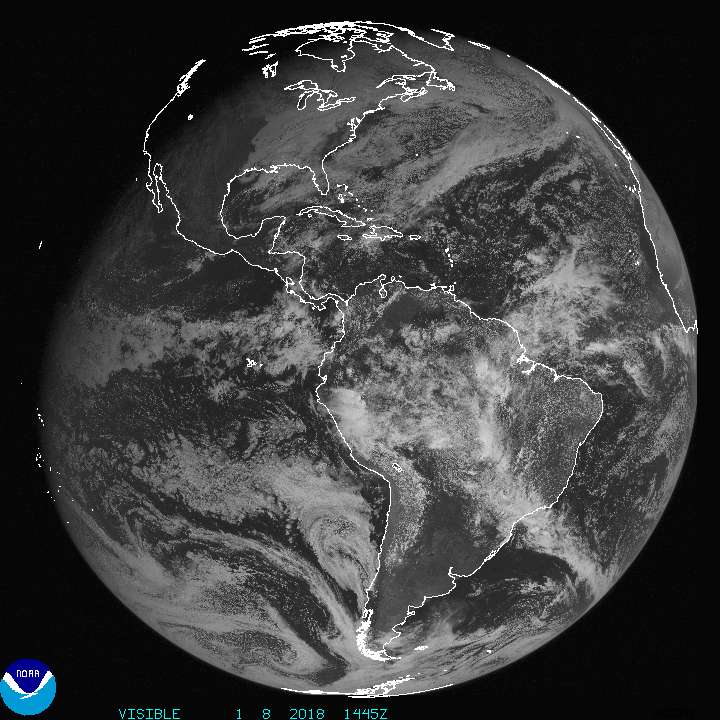
Earth in HD

More stunning imagery from the Japanese Kaguya spacecraft currently orbiting the Moon. You can see the actual movies of Earth "rise" and Earth "set" here. The image here is a still shot from one of the movies, showing the Arabian Peninsula and the Indian Ocean. The image approximates what the Apollo astronauts saw as they orbited the Moon. Well done JAXA!

Wednesday, November 07, 2007

HDTV at the Moon

Click on the image here to see some beautiful HDTV footage of the Moon acquired from an altitude of 62 miles above the surface. The imagery is from the Kaguya satellite, the first Japanese satellite to orbit the Moon. Kaguya settled into lunar orbit about a month ago.

Monday, November 05, 2007

Asian powers in lunar orbit

China and Japan have joined the club of nations that have put satellites in orbit around the Moon. China's Chang'e 1 satellite entered lunar orbit in the last 24 hours and will soon begin its mission of examining the chemical composition of the lunar surface. The Chinese satellite entered orbit on the heels of a Japanese satellite that arrived about a month ago. While both China and Japan deny that their lunar efforts represent a budding space rivalry, I can confidently say it does. The Moon is no longer an American playground, other nations are showing interest and you can be assured they do not all view the Moon as a place to visit for spectacular vistas. The Moon is a mineral and resource bonanza waiting to be tapped.

See Comet Holmes with your naked eye tonight!

Do not miss a chance to see a naked eye comet, they do not come around often (although we've been lucky enough to have 2 in the last year or so). The sky map here, from Sky & Telescope magazine, shows you how to find Comet Holmes in the northern sky. The simplest approach is probably to find the North Star (Polaris) and then start moving to your right and down in your field of view. Another option is to find the bright star Capella and then move up in your field of view. The comet will look a bit like a fuzzy star. Comet Holmes is not a spectacular long-tailed comet, so in that sense it will disappoint, but it is still an amazing celestial object that is spewing gas and dust into space at enormous speeds.

Thursday, October 04, 2007

Comet Encke, de-tailed

Click on the image above to see a movie of the tail being ripped off a comet by a wall of plasma thrown off the sun. The comet in the image is Encke, a short period comet that orbits the sun every 3.3 years. The mechanism that removed the comet tail is not collisional but rather electromagnetic. Comets typically have two tails, a dust tail (the one seen by our eyes) that consists of dust particles thrown off the comet head and an ion tail that consists of electrically charged atoms and molecules thrown off the comet head. The imagery here shows the ion tail, which responds to magnetic fields. It is likely that as the solar plasma swept past it compressed the magnetic field within the comet's ion tail, causing it to reconfigure in such a way that the tail was severed from the comet head. The solar plasma strips off the tail, carrying it downstream (to the left in the image). The comet quickly forms a new ion tail near the end of the image sequence. Each frame in the movie is 45 minutes apart.

50 years

The space age began 50 years ago today with the Soviet launch of Sputnik, a 184 pound satellite with 4 battery powered transmitters. We've accomplished amazing things in space over the last 50 years, but we should have done more.

Wednesday, September 19, 2007

Our star

Welcome EKT, our universe in 6 pounds, 8 ounces.

Sunday, September 16, 2007

free falling

Saturday, September 08, 2007

Steve Fossett

Here's hoping that aviation adventurer Steve Fossett is found alive in the New Mexico desert. Fossett has been missing for 5 full days now after taking off in a small aircraft on Monday. He didn't file a flight plan (not necessary for the trip he was planning to execute) and the beacons from his aircraft never reported so rescuers are currently searching a large swath of New Mexico desert looking for the proverbial needle. Adventurers like Fossett are currently the financial and inspirational drivers for bold private aviation efforts, including private spacecraft.

Rovers back in action

The global dust storms on Mars have finally abated (for now) and the Spirit and Opportunity rovers are getting back to work. The dust storms nearly ended the rover missions by severely diminishing the amount of sunlight the rover solar panels were able to absorb. Fortunately, the brightening skies have allowed the rovers to recharge and start moving again. Opportunity is currently sitting at the lip of the enormous Victoria crater and will enter the crater sometime next week.

Saturday, September 01, 2007

balloon in space

The image above was taken from an altitude of 117,597 feet above the surface of the Earth. It was taken with a Nikon Coolpix digital camera from a helium balloon launched in Alberta, Canada on August 11, 2007. As best I can gather from their website, the balloon was launched by a group of radio/space enthusiasts with their own money and a digital camera that can be bought at any store. I consider this accomplishment a part of the growing civilian exploration of space, the cutting edge of that effort being companies like Virgin Galactic that will soon offer paid seats to space.

Thursday, August 30, 2007

Google Sky first spin

I finally had a chance to download the new version of Google Earth featuring Google Sky and it is definitely worth checking out. The navigation is the same as for the Earth globe, although keeping track of north is a little harder until you get your bearings. The sky view includes a number of layers that can be turned on and off, including constellations, planet tracks, and flags for detailed Hubble Space Telescope imagery that is available for major night sky objects like the Andromeda galaxy. The zoom capability that is a hallmark of Google Earth is particularly educational for the Google Sky view. It provides a great sense of scale, demonstrating the relative sizes of objects in the night sky.

Wednesday, August 22, 2007

Google Sky

Download the new version of Google Earth and you will get the latest offering from Google, Google Sky. It is a navigable map of the night sky with imagery from the Hubble Space Telescope. You can zoom and rotate among other bells and whistles.

Tuesday, August 21, 2007

shuttle home

Space Shuttle Endeavour landed safely at Kennedy Space Center in Florida at 12:32 EDT. The tile damage suffered during launch and deemed safe for re-entry was not an issue.

Thursday, August 16, 2007

Mira, like a bullet

The image here was acquired by the Galaxy Evolution Explorer, a NASA satellite that is currently surveying the entire night sky in the ultraviolet. Ultraviolet light is electromagnetic radiation that is a bit more energetic than the visual light to which the human eye is most sensitive. The image shows the star Mira moving through space (from left to right in the image) at enormous speeds, shedding gas along the way. Mira itself is buried in the bright region on the right, which is surrounded by a "bow shock", a feature that looks like the wake raised by a rock in a stream. The bow shock indicates Mira is moving rapidly, and measurements conclude that the star is moving at 291,000 miles per hour. The "tail" being left behind by the star is over 13 light years in size, truly enormous.

Tuesday, August 14, 2007

the empty ocean

I just finished reading a series of articles in the April 2007 issue of National Geographic on the state of the ocean and sealife. The articles cover the global human mismanagement of the ocean in terms of industrial fishing and commercial aquaculture, the impact of industrial fishing on a small Newfoundland village that is dying because of the collapse of local cod stocks, and finally the impressive example of New Zealand in setting aside no-take marine reserves that have produced an explosion of recovery for marine life.

The article covering the global ocean crisis is downright scary in scope. The commercial fishing fleets of the industrialized nations of the world have scoured the oceans clean, leaving mere remnant populations of majestic fish species, including the bluefin tuna, hunted mercilessly to the ends of the earth to satisfy sushi needs worldwide. Some species will never recover and are effectively extinct. There are twice as many fishing vessels currently at sea as are needed for sustainable fishing. The bad news goes on and on.

The article on New Zealand offers some hope. New Zealand first set aside coastal areas as no-take marine reserves over 30 years ago. The outcome has been nothing short of miraculous. With no commercial or recreational fishing allowed, marine species rebounded quickly and abundantly in these reserves. Tourist and research dollars followed, providing a model example of how nature alone can often be more profitable than anything created by man. Thankfully the United States has started to respond to these examples, the recently established Hawaiian islands national marine sanctuary being the largest protected marine environment on earth. But more must be done or our grandchildren will know many species of fish only from photos.

The author of one of these articles makes the excellent point that if the bluefin tuna (a gorgeous ocean fish that on average once tipped the scales at 500 pounds and 12 feet long) ran on land, like lions or bison, they would be protected and revered. Just because the bluefin tuna runs in the ocean, beyond our view, does not mean it does not deserve equal reverence.

The title of this post is a Richard Ellis book I plan on reading that explores our dying oceans.

Sunday, August 12, 2007

moon landing

Astronomy news hound Chris passes along to me this week that NASA has published a launch schedule for Project Orion, our return to the Moon. The first landing is scheduled for December of 2019. A lot of things have to go right for that date to stand, but here's hoping for a great Christmas in 2019.

Shuttle crisis 2007b, or c (or is it d?)

Here we go again, folks. Space shuttle Endeavour, currently docked with the International Space Station, has tile damage on the belly of the spacecraft. The damage is no doubt the result of ice or foam debris shaken loose from the boosters hitting the orbiter during launch. Following the Columbia re-entry loss in 2003 every shuttle undergoes detailed examination upon reaching orbit. I believe all 6 shuttle missions since the loss of Columbia have found damage to the heat shield tiles upon reaching orbit. The reality is that every shuttle ever launched has suffered damage during launch. One out of roughly 100 missions was lost because of that damage. In other words, this is probably nothing to worry about. Statistical reality check aside, the damage this time around may be a little more serious than previous instances in that it appears the damaged tile may have been completely penetrated, exposing underlying insulation and the frame of the orbiter itself. Further investigations in the coming week will determine need for repair. The incident is made all the more poignant in that one of the crew is a civilian teacher who was in fact the backup to Christa McAuliffe on the Challenger mission lost in 1986. This stuff makes for great news, but rest assured, everything will be fine.

I think that our hypersensitivity to shuttle damage is similar to the hypersensitivity to damage that accompanies commercial air travel. Forty years ago commercial aircraft probably flew regularly with damages that would ground them today. Similarly, space shuttles flew and landed in the 80s and 90s with damage that is currently unacceptable. I'm not suggesting the attention to damage isn't a good thing, it is, but the engineering of complex flying machines always involves margin, i.e. wiggle room in design and construction that gives us outs if something fails. So yes, tiles may be damaged, but that does not mean disaster is imminent.

Tuesday, June 26, 2007

space ad

This is an ad from the late 60s or early 70s in which Volkswagen paid homage to the lunar lander, a.k.a. the spider, a.k.a. the ugliest contraption ever imagined by man.

Sunday, June 24, 2007

Tvashtar

The image here shows the Tvashtar volcano erupting on Io, a moon of Jupiter. The image was actually acquired by the Pluto-bound spacecraft New Horizons. New Horizons used a Jupiter flyby a few months ago to gain speed for the long cruise out to Pluto. During the flyby New Horizons took advantage to study the moons of Jupiter as well as Jupiter itself. The Tvashtar plume, at the top of the image, reaches hundreds of miles into space. The plume is symmetric because Io has no real atmosphere so the erupted material follows perfect arc trajectories on all sides.